
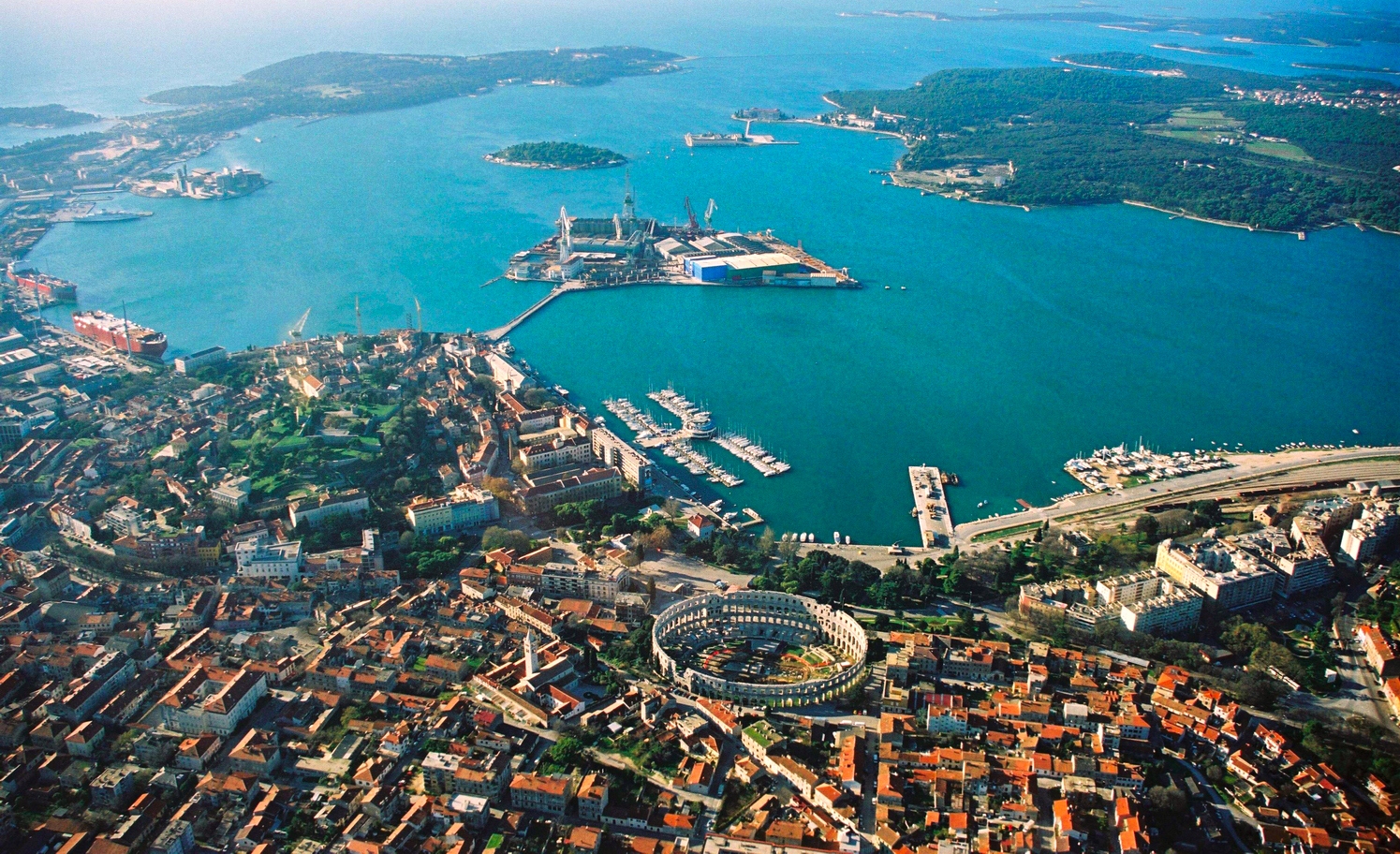


Let me show ya somethin about Nepal
Top 10 reason you know your in Nepal
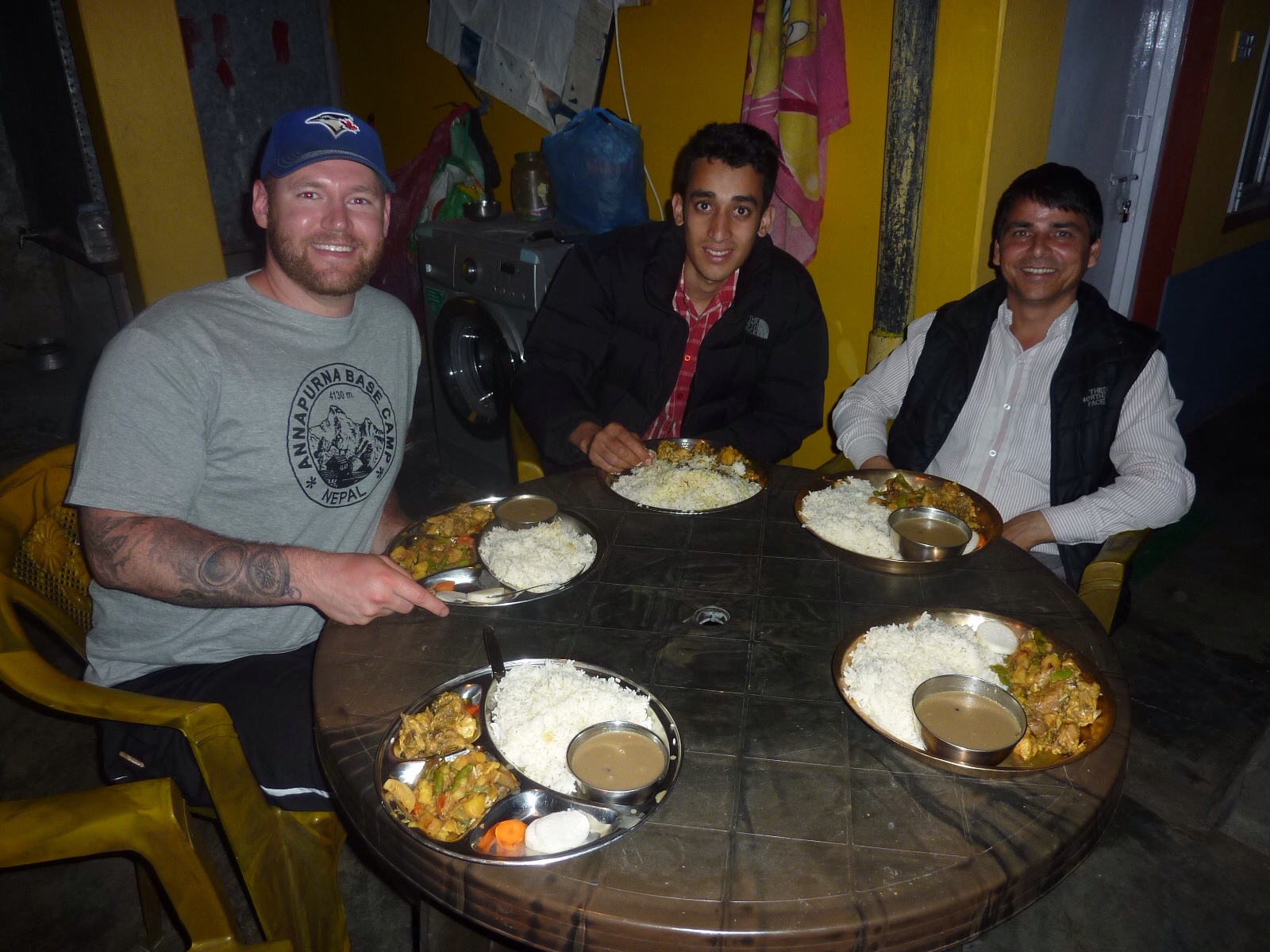
1. Daal Bhat. This is the national meal eaten by nearly all Nepalis twice a day. I believe the literal translation is lentil rice. Typically this meal is served on fancy metal trays separated by compartments. Lentils and spices are mixed together to make a sort of soup called “Daal”. This is often served with a side helping of spicy potatoe chunks and vegetable curry. Since this is the national meal it is all you can eat everywhere. If your not full, you can get a second helping no matter where you are. I wasn't so fond of Daal Bhat but Megan seems to really enjoy it.
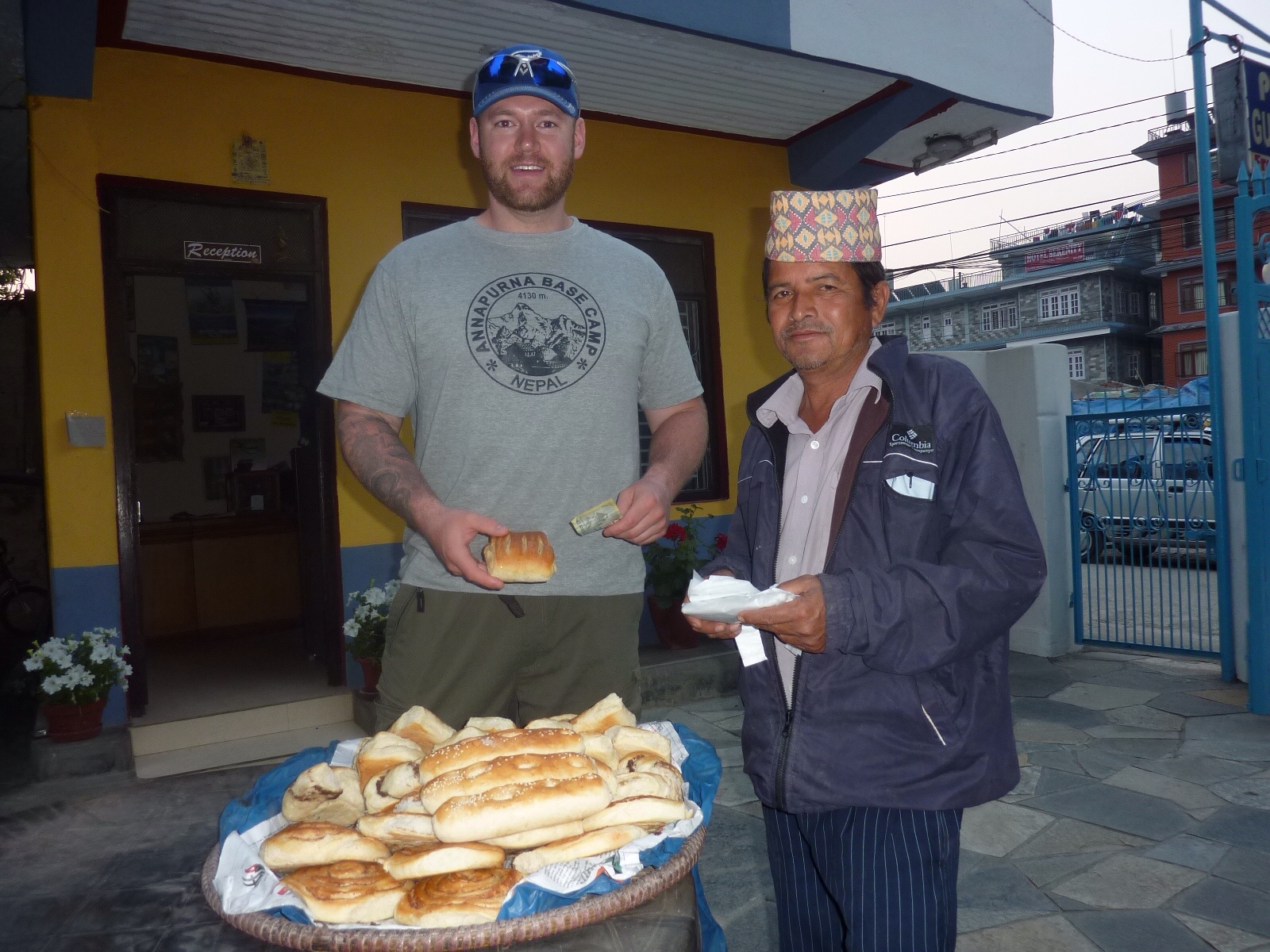
2. Dhaka Topi. Everywhere in Nepal men can be seen wearing a hat called Dhaka Topi. Nepalis consider Dhaka topi as a source of pride, and it is very much attached to the culture. It is widely worn by government employees, and forms a part of the national dress. Though the history of Dhaka topi is still debated, it is believed to be used by the Nepali people since at least last two hundred years.
3. Insane driving. This seems to be quite common in nearly all of the developing countries I have visited although Nepal has taken it to a new level. Drivers weave in and out of traffic with extreme precision dodging motorbikes, trucks, pedestrians, and farm animals in the process. Sometimes mere inches are all that separate trucks and buses as they meet on the highway. Passing vehicles around corners or over hills are commonplace and it's not uncommon to see vehicles slam on their brakes to narrowly avoid a collision. Drivers honk their horns continuously not out of frustration but rather to let the other vehicles and pedestrians know that they are coming. Us Westerners are always death gripping our seats in anticipation of a crash even though things seem to work out and the driver knew what he was doing all along. The lack of electricity in Nepal means their are no traffic lights which means that every intersection quickly becomes somewhat of a free for all.

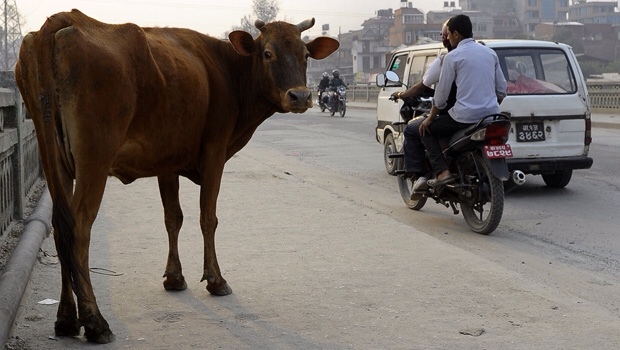
4. Cows everywhere. Since cows are a sacred animal in the Hindu religion, cows can be seen absolutely everywhere. It's not uncommon for traffic to be backed up only to find that the cause was a lazy cow laying in the middle of the road. Sometimes Megan and I will have to vacate the sidewalk because the cows have taken it over. It's also illegal to eat beef in Nepal unless the beef has been shipped to Nepal from India (which can seem a bit odd I admit).
5. People packing crazy loads. This pertains mostly to the mountainous regions of Nepal. Porters are expected to carry loads of 40KG on their backs for days at a time. On top of this, they secure the load with a rope that is tied around their heads. I'm tempted to try it although Meg won't allow it because she thinks it will break my neck. She's probably right. One British gal we met on our hike told us that she had seen a woman packing a refridgerator on her back! It was amazing to hike for a days deep into the mountains to find a huge guesthouse built at the top of a mountain. I found myself constantly thinking “How the hell did that build THAT up here?!”. Every piece of lumber, every bag of cement, every table and chair, EVERYTHING had to be packed up there. It's almost like a system of ants constantly carrying supplies throughout the trails.
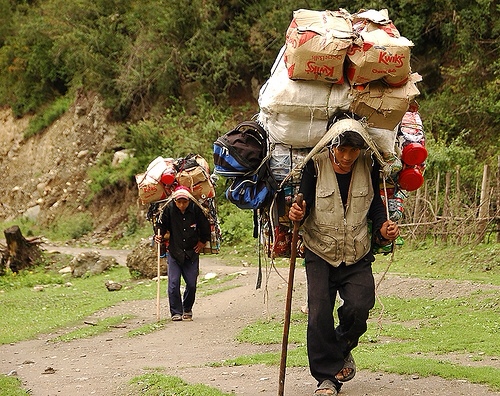
Our guide estimated that for a two day trip a porter might earn as much as 70 rupees/KG packed. 70 rupees is equal to 75 cents Canadian. Not much really.
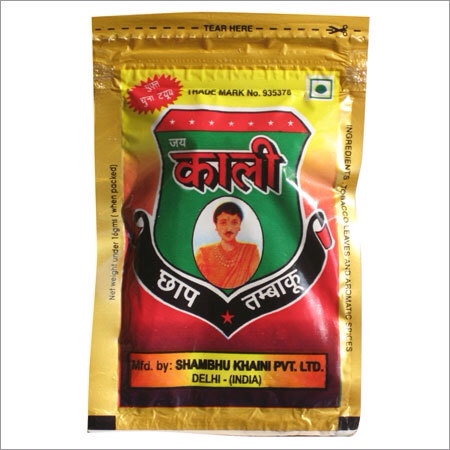
6. Surti (pronounced soor-ti). Surti is the common tobacco found in Nepal. It comes in a small packet that contains tobacco flakes mixed with a white lime substance used for better absorption. Our guide Lal said that the majority of guides and porters in Nepal use Surti and that 70% smoke cigarettes on top of that. A 30 gram package usually sells for 15 rupees (20 cents Canadian). It actually not to bad although in my estimation it's much stronger than typical Westen tobacco.
7. Prayer flags. Buddhist prayer flags are found all over the Himalayan regions. The flags are organized in groups of five, each one being a different color and in a specific order. Each color represents a different element of the earth (wind, fire, water, etc.). In tradition Tibetan medicine, when all these elements are in balance a body is considered healthy.
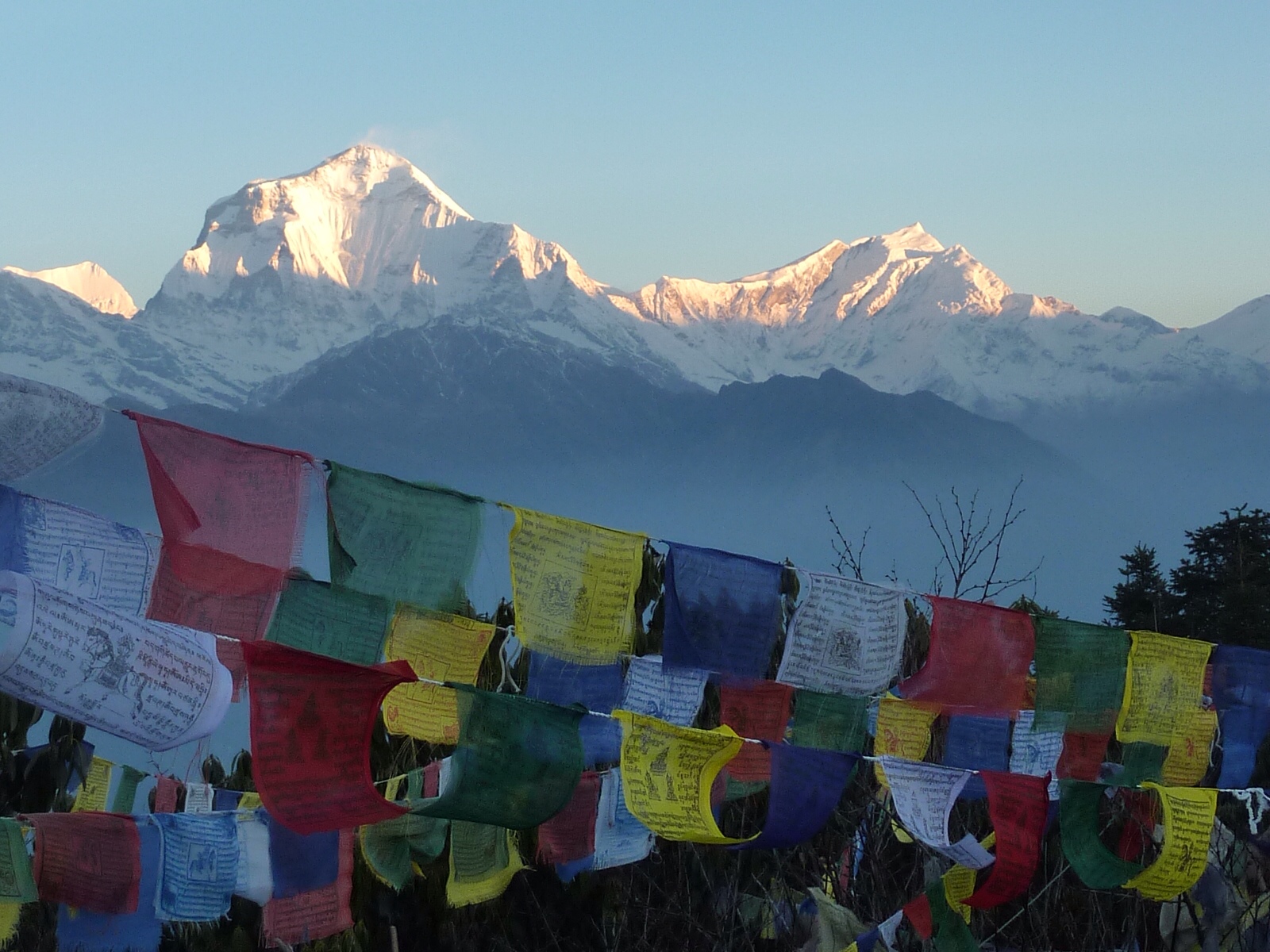
Picture taken at Poon Hill on March 31
8. Momos. Momos are the traditional appetizer in Nepal. It's a number of small dumplings organized in a circle on your plate. Each one is filled with your choice of meat, egg, or vegetable. They are delicious and certainly one of the things I will miss about Nepal. They are served with a spicy dipping sauce and usually cost around 200 rupees ($2.30 Canadian).
9. Use your right hand. It is immensely important in Nepal to use the right hand to perform certain tasks and the left hand to perform certain tasks. If you are shaking someone's hand, accepting money, eating food, etc. – you must use your right hand for this. It is considered your clean hand. If you are doing anything in the toilet, wiping your nose, etc. – you must use your left hand. Mixing these up can be considered a big insult in Nepal. This is why you must always walk clockwise around temples or stupas. Because if you wak counterclockwise, your dirty hand is towards the religious building/ symbol. Even if you are only waving to someone you should always use your right hand.

10. Gurkha knives. Nepalis are extremely proud of their Gurkha warriors. During 1814-1816 Britain and Nepal were looking to expand borders and met in what is now known as the Gurkha war (or Anglo-Nepalese war). Despite being largely outnumbered, Gurkha troops seemed to surprisingly hold their own against the British troops. The war ended with the signing of a treaty that saw Nepal give up land for a small sum of money. The British grew an immense respect for the Gurkhas and in World Wars 1&2 the British enlisted the help of more than 200,000 Gurkhas to fight in the British armies – playing a key role in the battle of Gallipoli to name one battle. Now Gurkha knives called Khukuris are sold in souvenir shops everywhere in Nepal.

We have now left Pokhara and have taken a bus to the historic city of Bhaktapur. I feel I need to thank our gracious hosts in Pokhara – Raj and Onita at Pushpa guesthouse. We got to know this wonderful couple very well and I will always remember our time together at Pushpa. I learned a lot about the politics, culture, and what it's like to be a businessman trying to make his way in Nepal from Raj. If anyone is visiting Nepal in the future I highly recommend you look this guy up for accommodation or for trekking.
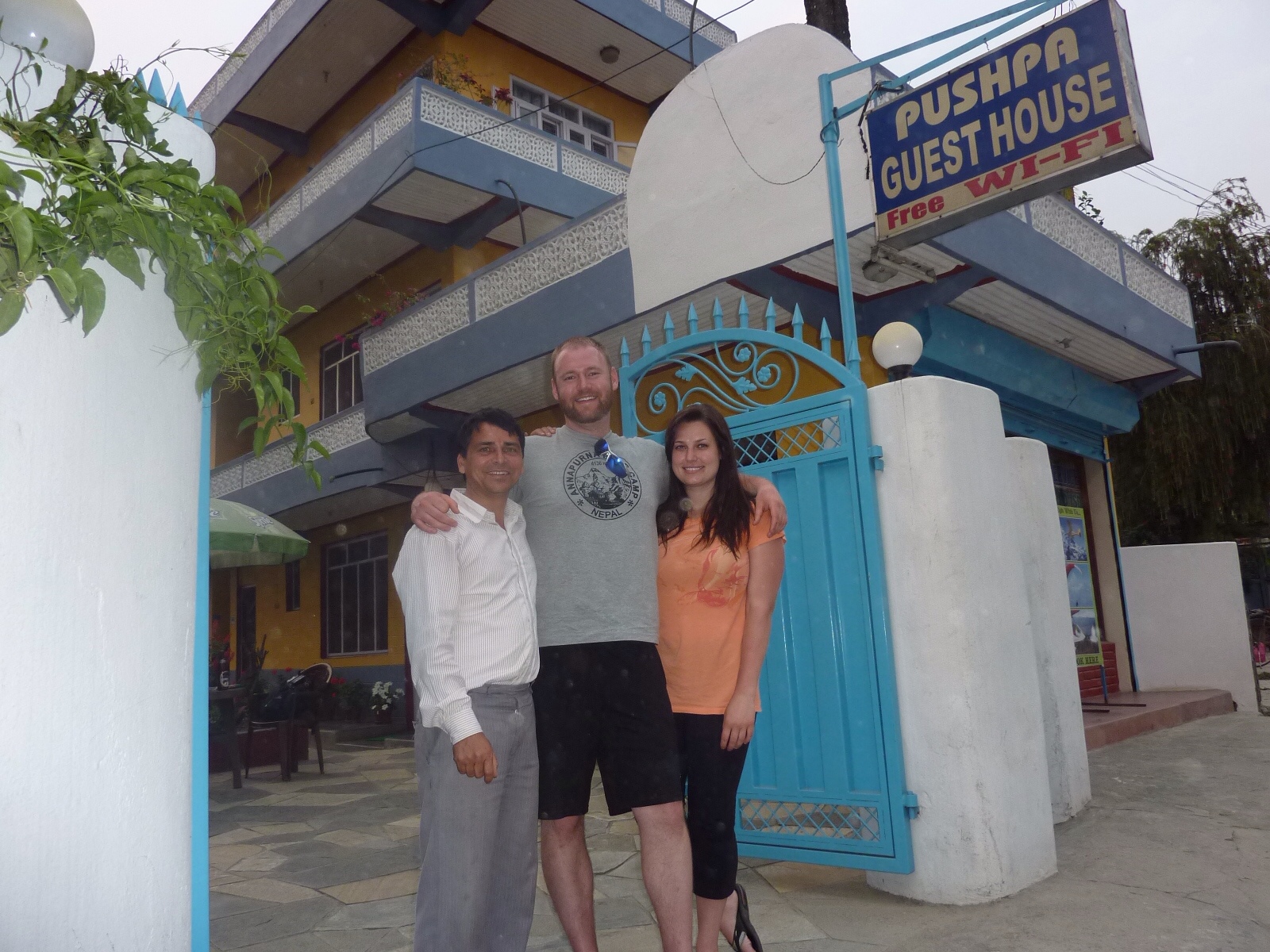
Raj, Jason, and Megan - April 11, 2014 at Pushpa
 Posted with Blogsy
 Kamikaze Canuck
Haha this was a great post to read! So true. I hope you enjoyed your stay in Pokhara, how long will you be staying in Nepal for?
Only 3.5 weeks in Nepal. It’s been a fascinating trip so far. Learning a ton about the culture!
Loved the way you described point number 3! So true and accurate. (On point number 6, it’s surti, pronounced soor-ti, “r” is not silent.)
Thanks for the correction. I have made the change. Glad you liked #3. – it’s tough to describe unless you’ve been here isn’t it?
As always Jason, thank you for letting us who are stuck at home travel vicariously through you. Another great adventure shared with us all. Loved it.