


Megan in front of the Wli Waterfall (Wli, Ghana)
She didn’t want me to post this picture. That’s why I posted it.
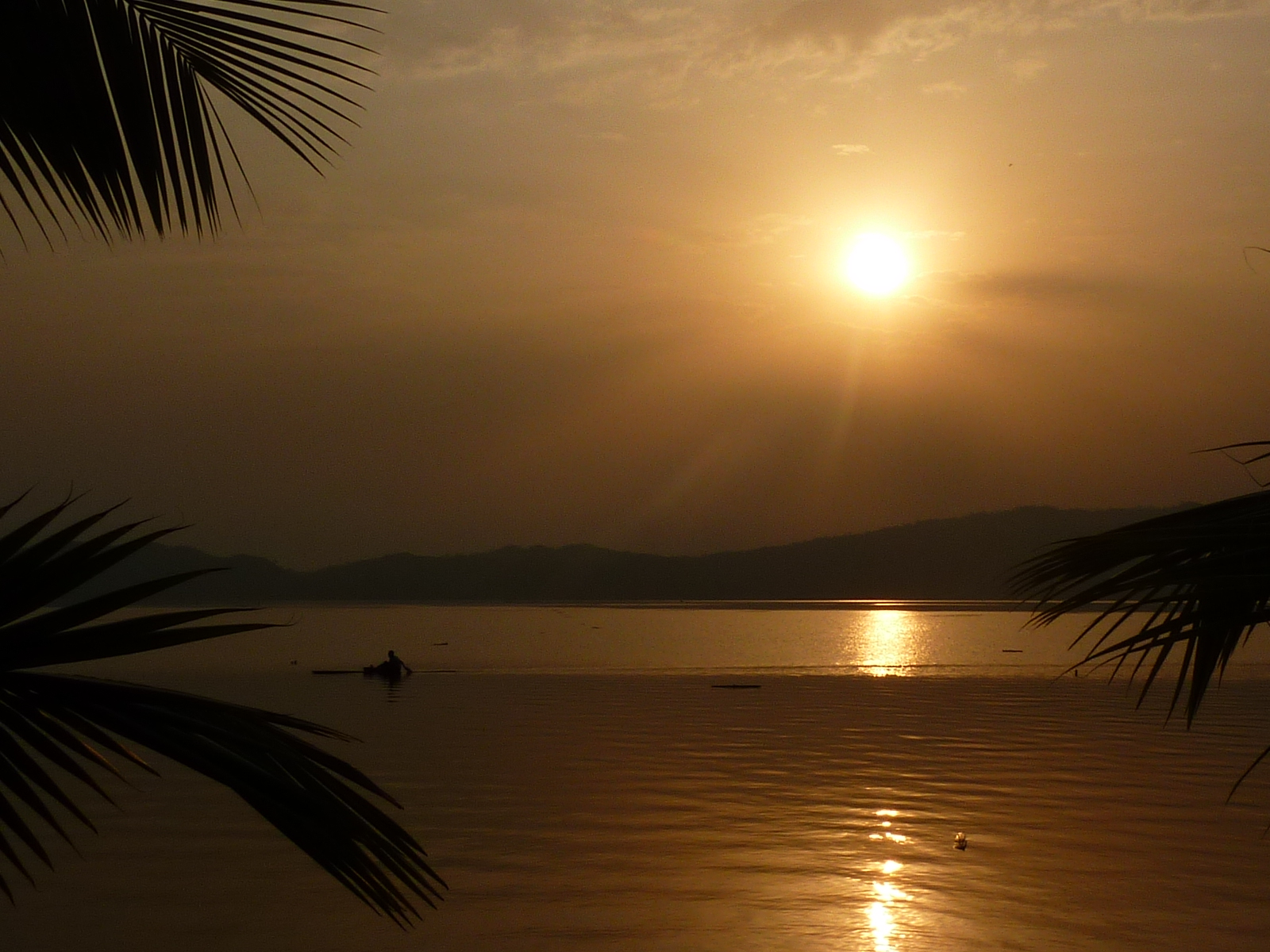
The sun is setting as a fisherman checks his nets for the last time in the day. (Lake Bosumtwi, Ghana)
The fishermen checked their nets 4 times per day. They mostly caught tiny fish (2 inches long) which they ate. If they caught a bigger fish they sold it in the market. We went swimming in the lake but kind of felt guilty that we could be scaring the fish away from their nets.
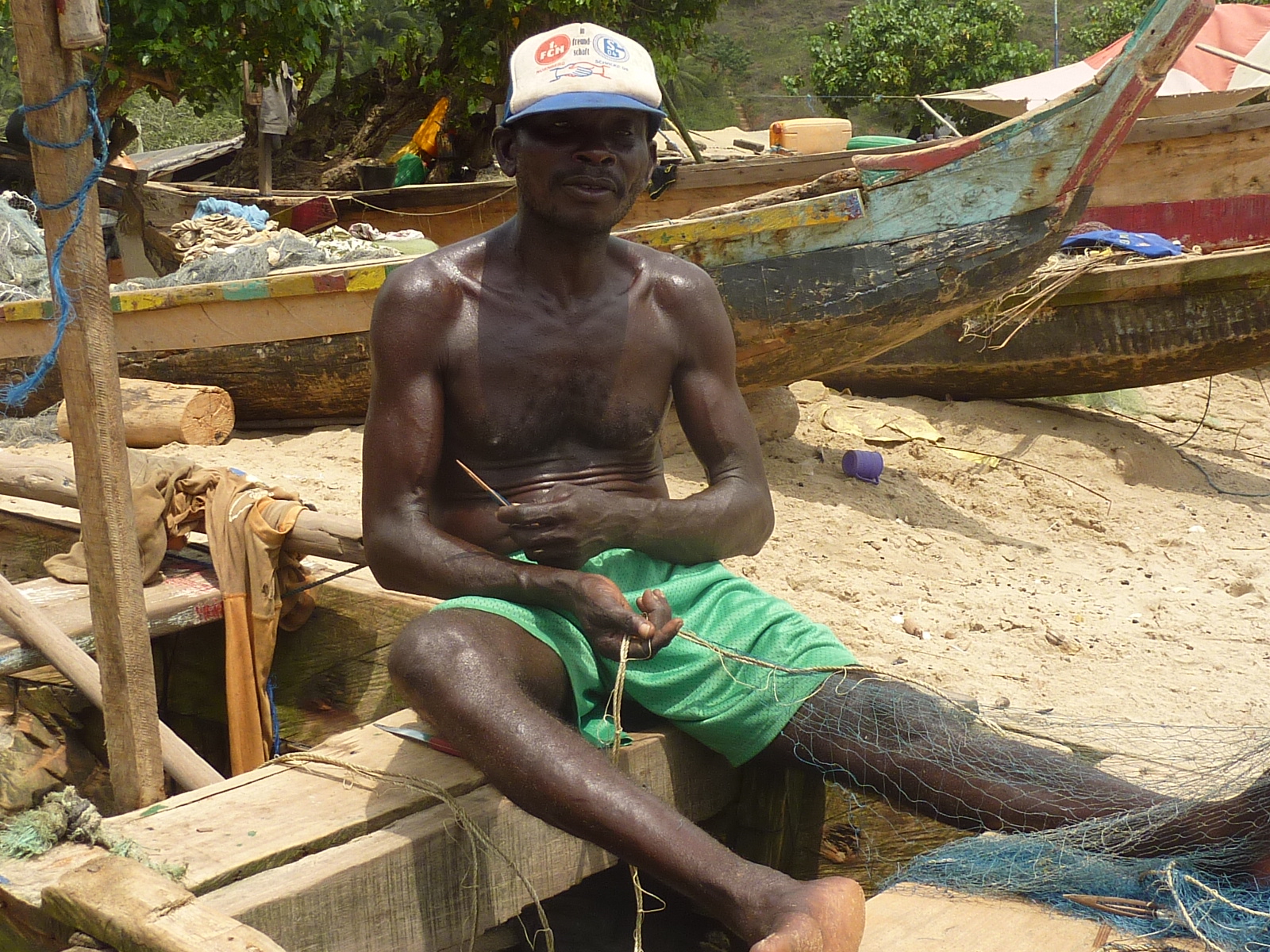
A fisherman repairs his nets after a large boat drove over them. (Butre, Ghana)
This man and his two sons were sitting in the sweltering heat, fixing their nets. He said that he had caught 3 big sharks the night before (but who knows… the language barrier often muddles communication).
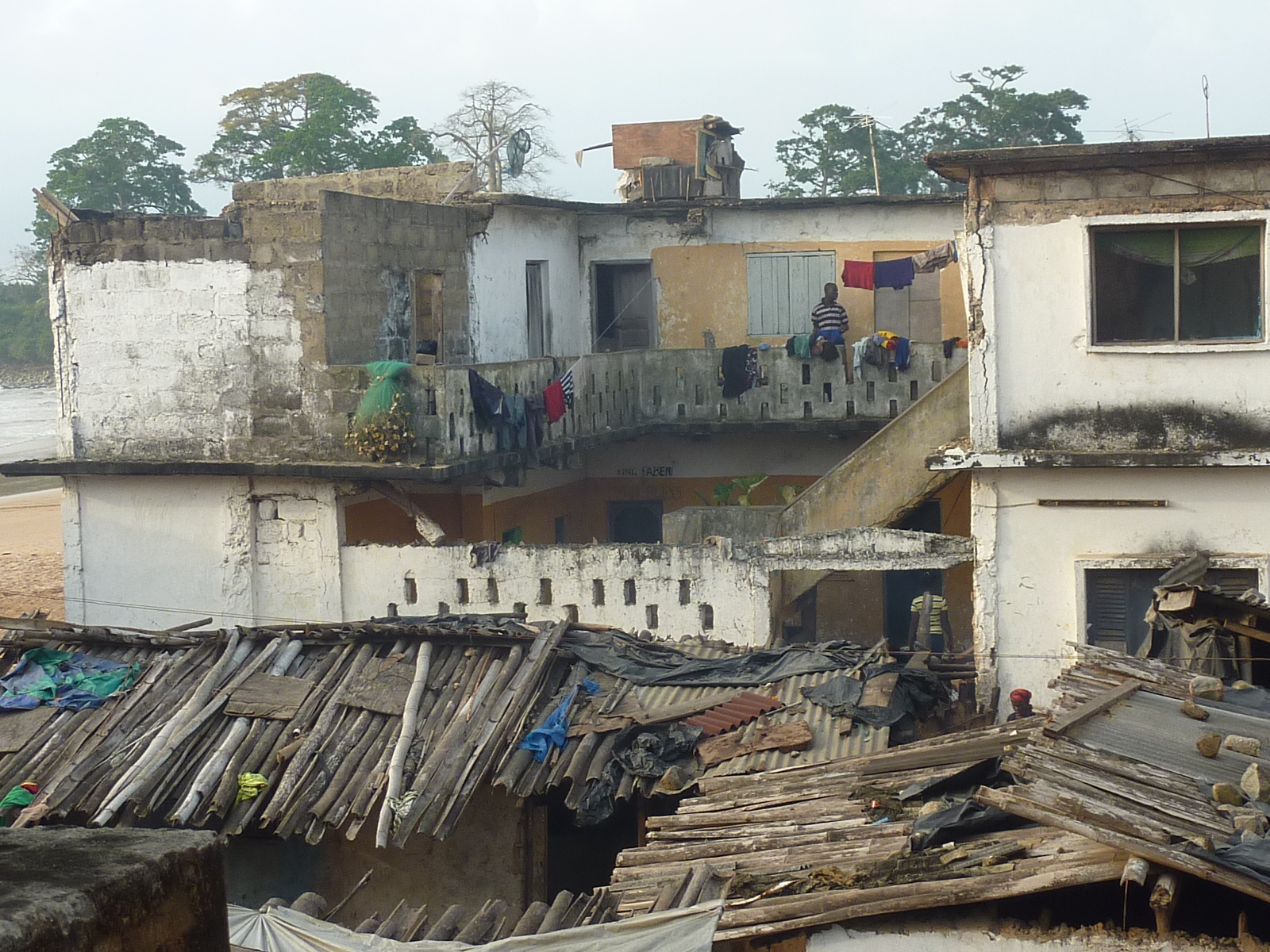
A man hangs his laundry to dry (Busua, Ghana)
This was the view from the window of our guesthouse. Poverty beside affluence was everywhere.
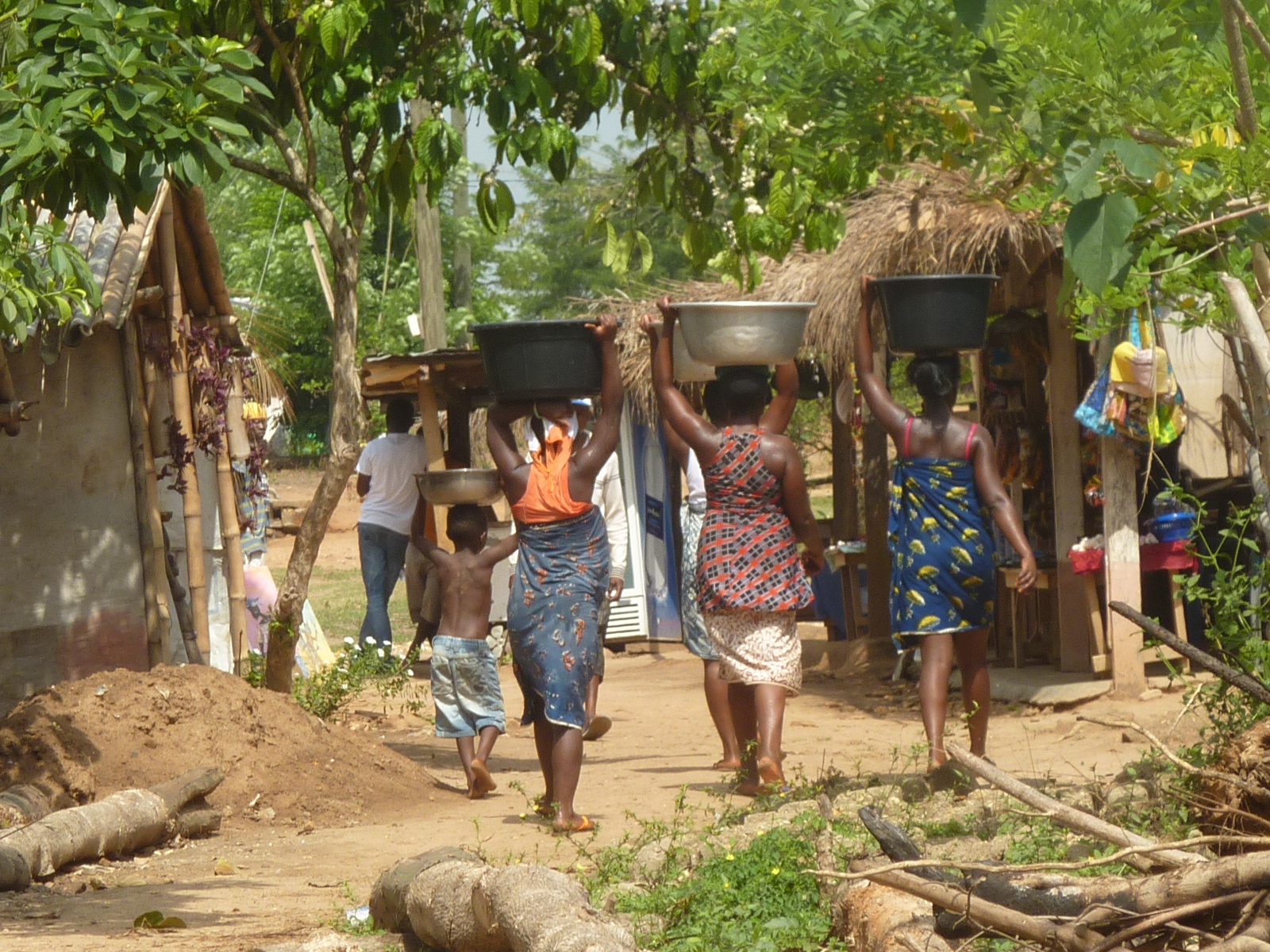
Women fetching water from the river (Wli, Ghana)
It’s sometimes difficult to take pictures here because many of the people don’t understand the concept of taking pictures for personal use. They think that you must be working for a magazine and therefore may decline to have their picture taken. I snuck this shot from behind to avoid asking permission – I know it’s not right but I couldn’t resist getting this great picture.

Megan and Jennifer (Stumble Inn, Elmina, Ghana)
The staff at our guesthouses were fantastic. Megan was particularly fond of Jennifer who played card games with us for two days.
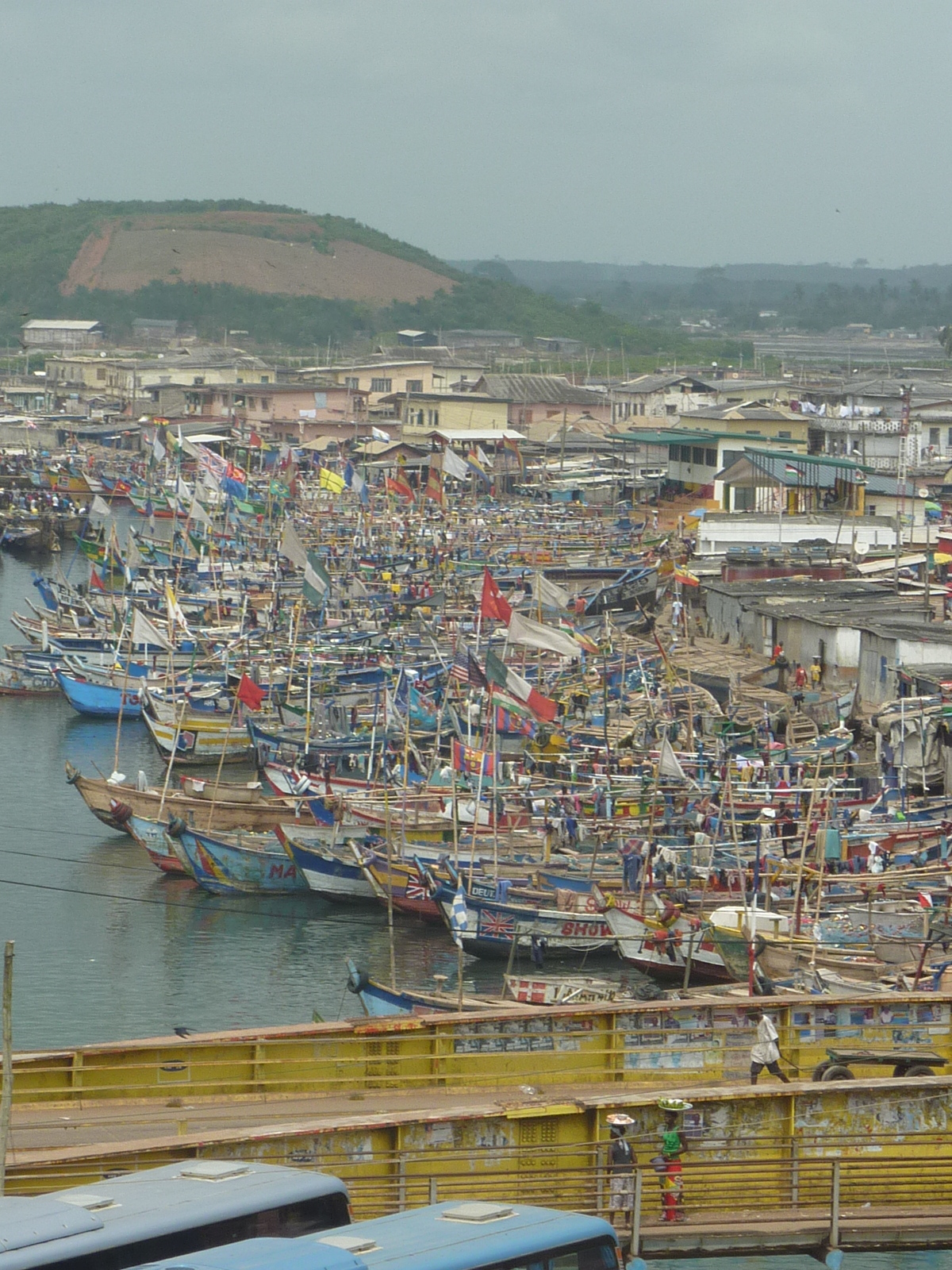
Bustling fishing harbour (Elmina, Ghana)
This colourful harbour was packed with boats displaying flags of different countries (although I didn’t see Canada) as a way of distinguishing the boats.
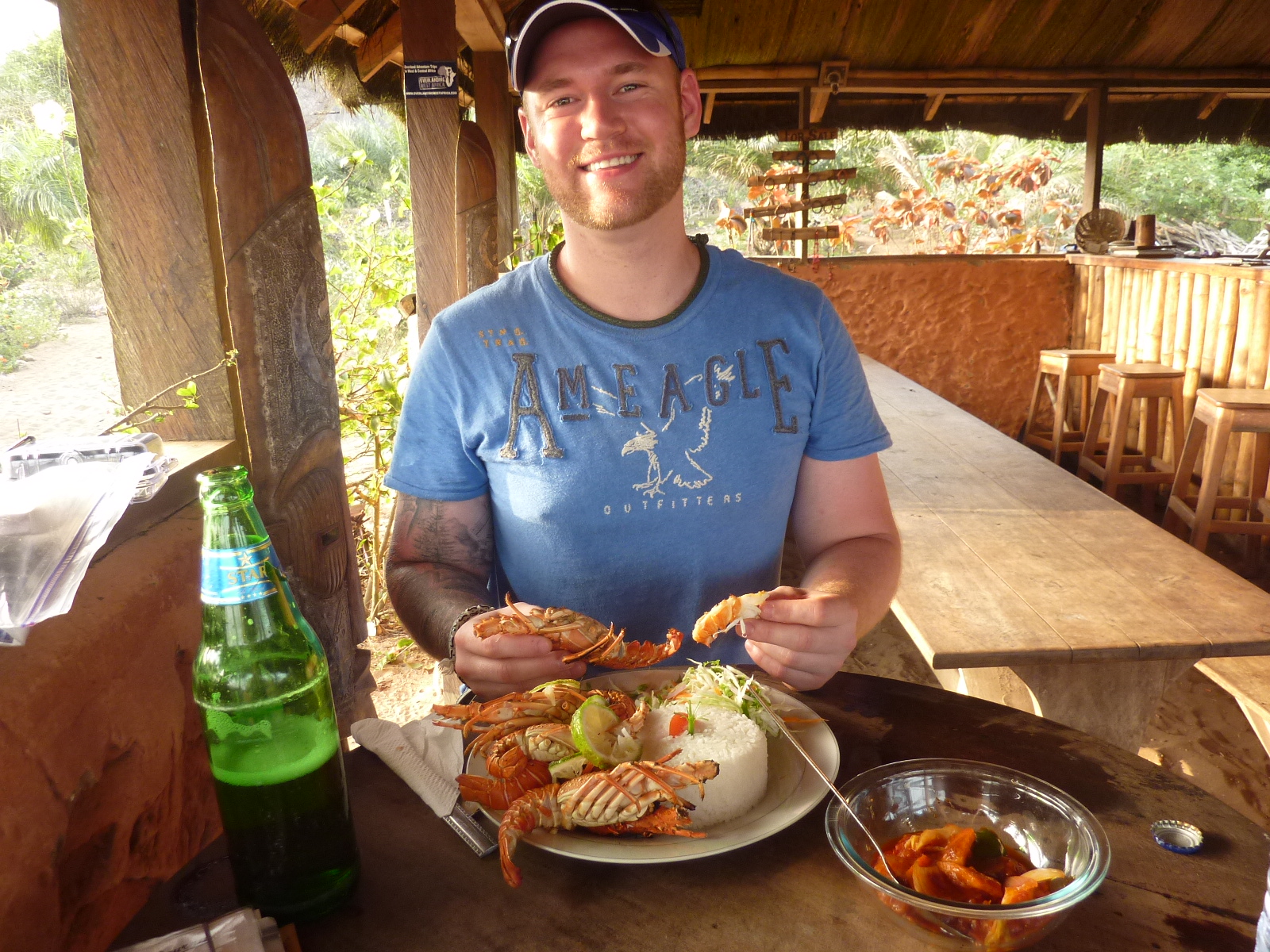
Can’t beat a huge portion of lobster and beer for $12 (Stumble Inn, Elmina, Ghana)
Ghana (being a coastal country) had cheap seafood everywhere. This dish costed 20 Cedi ($10) while the large 750ml beer costed 3.80 Cedi ($1.90). I would have to say this was the best meal I ate in Ghana…..
“Looks better than that bloody Fufu stuff”

Men pull in their fishing nets at sunrise (Cape Coast, Ghana)
We watched men and children pull in fishing nets every day. Sometimes this grueling task would take upwards of 2 or 3 hours. One man at the back shouts out a rhythm that signals when the others should pull.
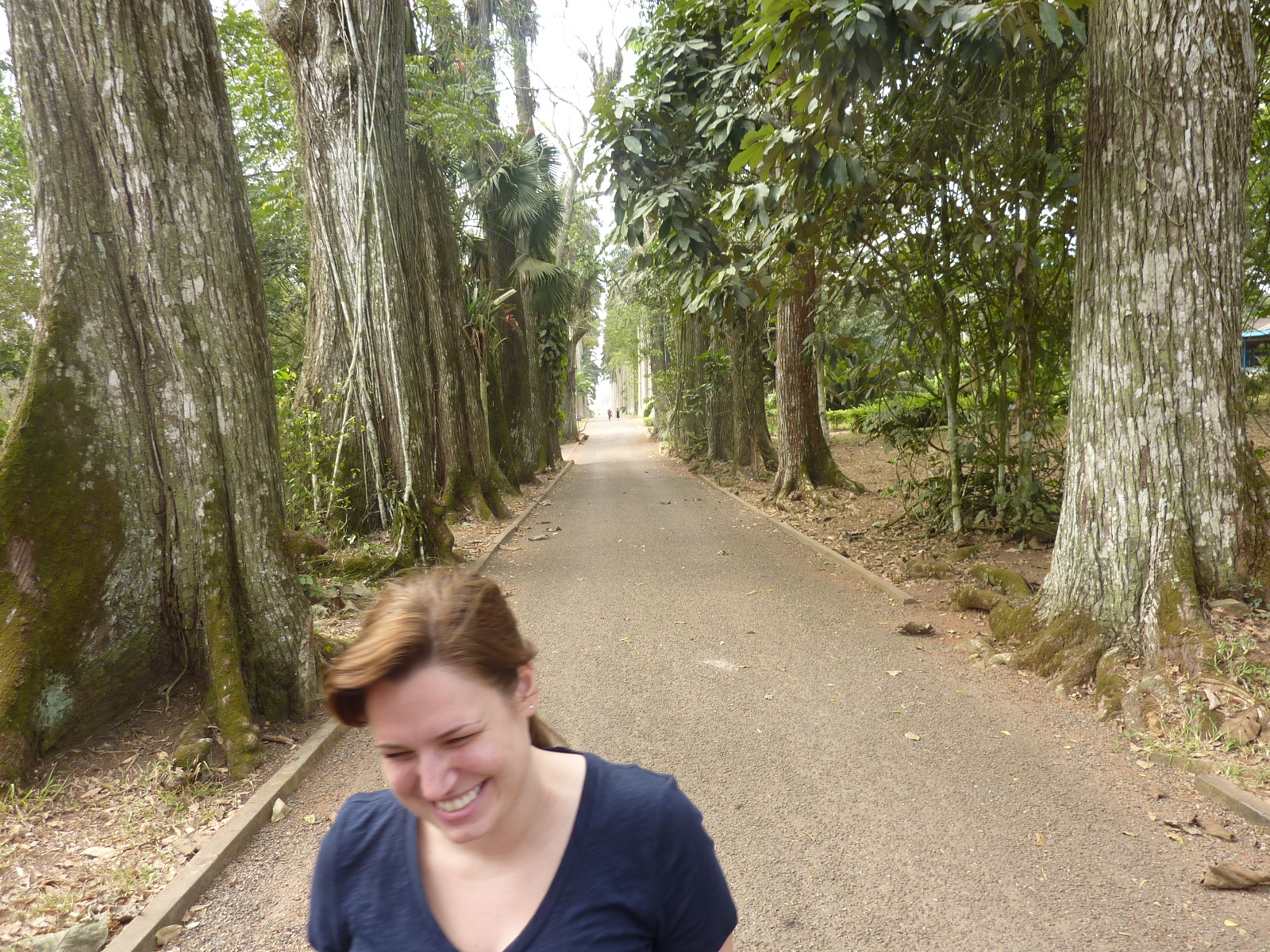
Megan laughs during a walk through Aburi Botanical Gardens (Aburi, Ghana)

Curious children stare at the funny looking white people (Somanya, Ghana)
These kids came to investigate what we were doing watching their families make beads.

The fascinating centuries old family tradition of bead making (Somanya, Ghana)
Unfortunately I didn’t get a chance to blog more about our visit to the bead making village. It really is an astounding process that has been around for hundreds of years. In fact, when the first European explorers came to this land, the locals would trade beads to them in return for other goods. I’ll give a quick rundown of the process:
1. Firstly the family goes out and collects glass bottles and firewood.
2. They mash it all up in a clay container until it become a fine glass dust.
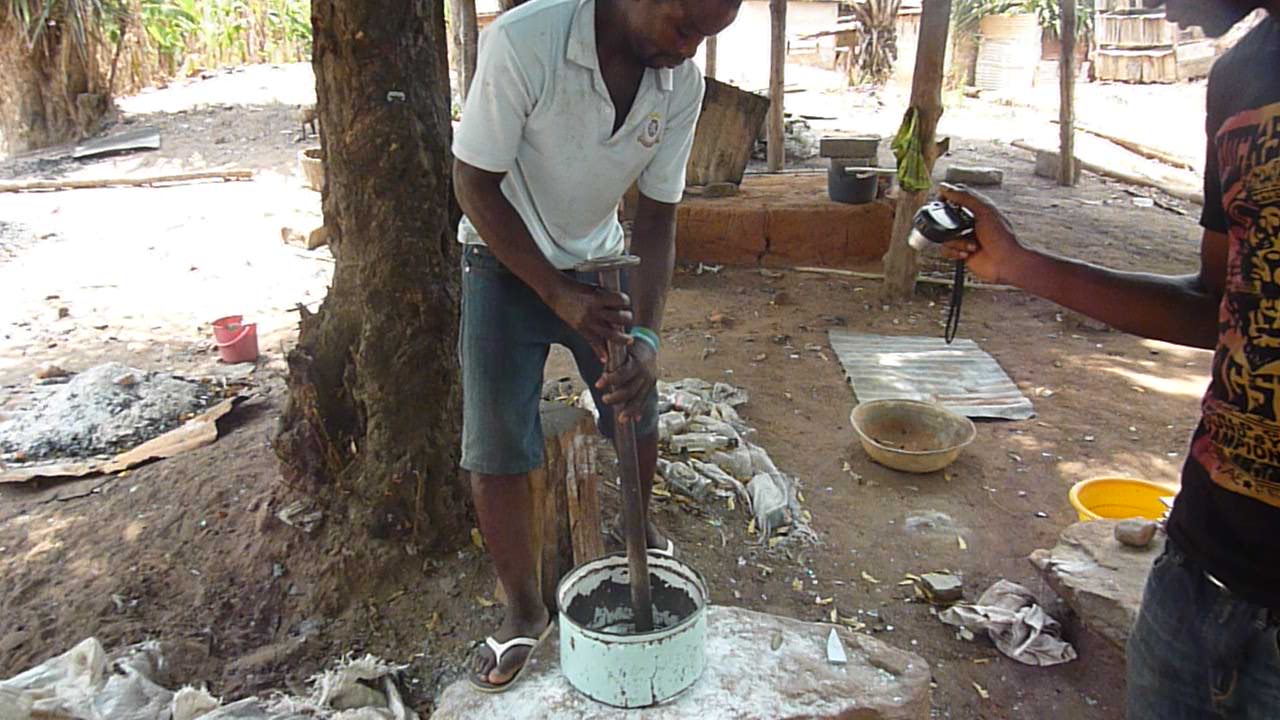
Crushing the glass.
3. The glass dust is filtered to clean it of any debris
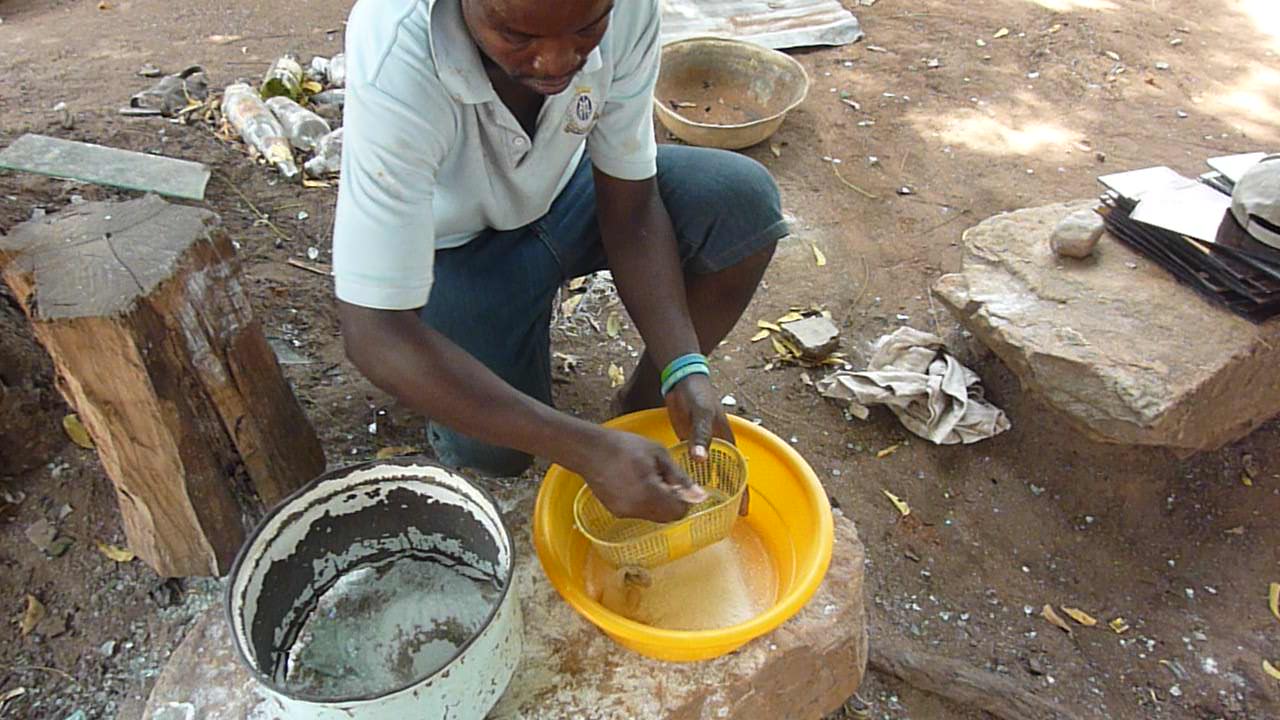
Filtering the glass dust
4. The dust is poured into a round clay mold (which is dunked in a solution to keep it from breaking from the heat of the kiln)
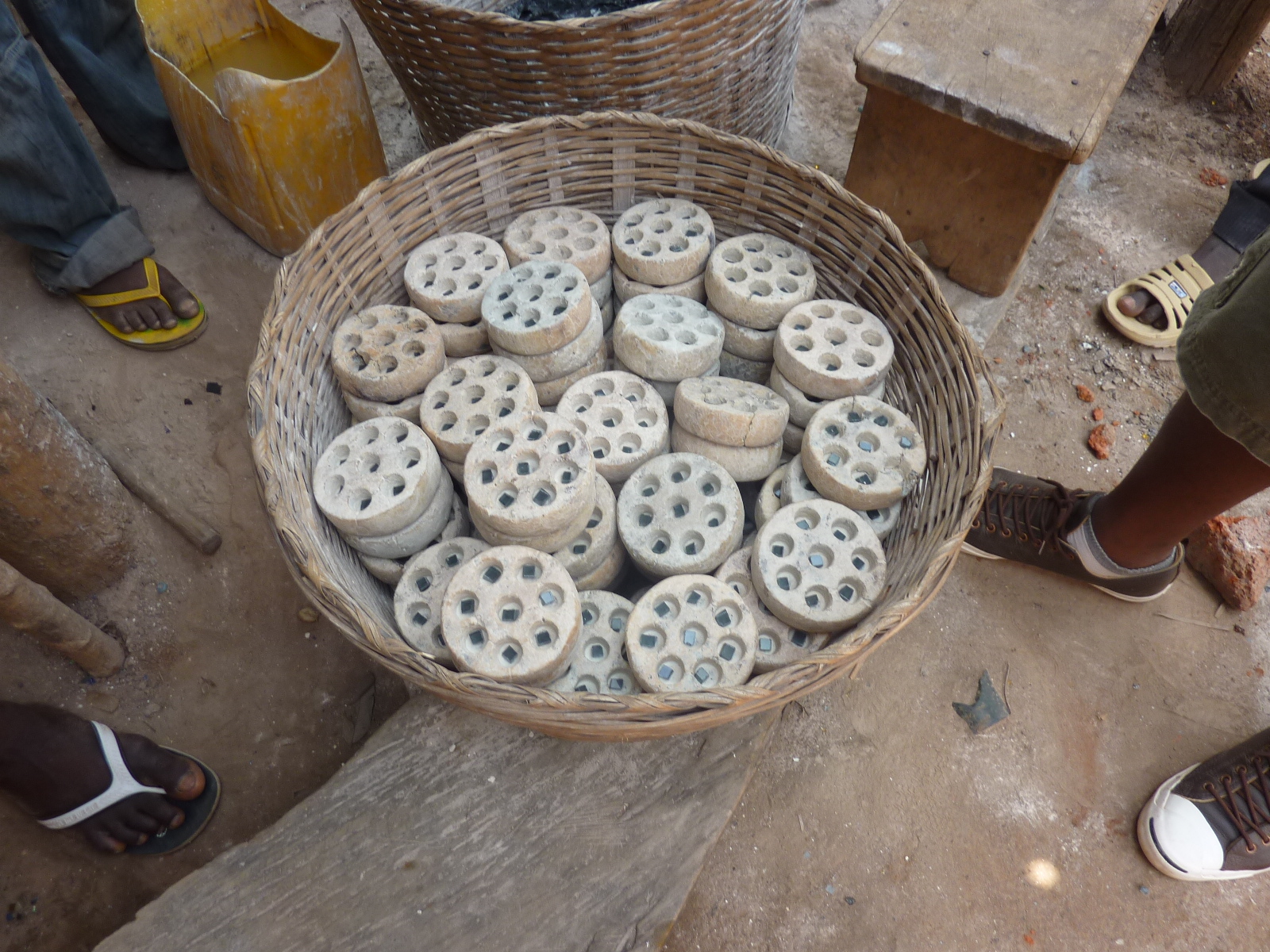
Clay moulds.
5. The mold is placed into a wood fired kiln made of clay and used spare vehicle parts.
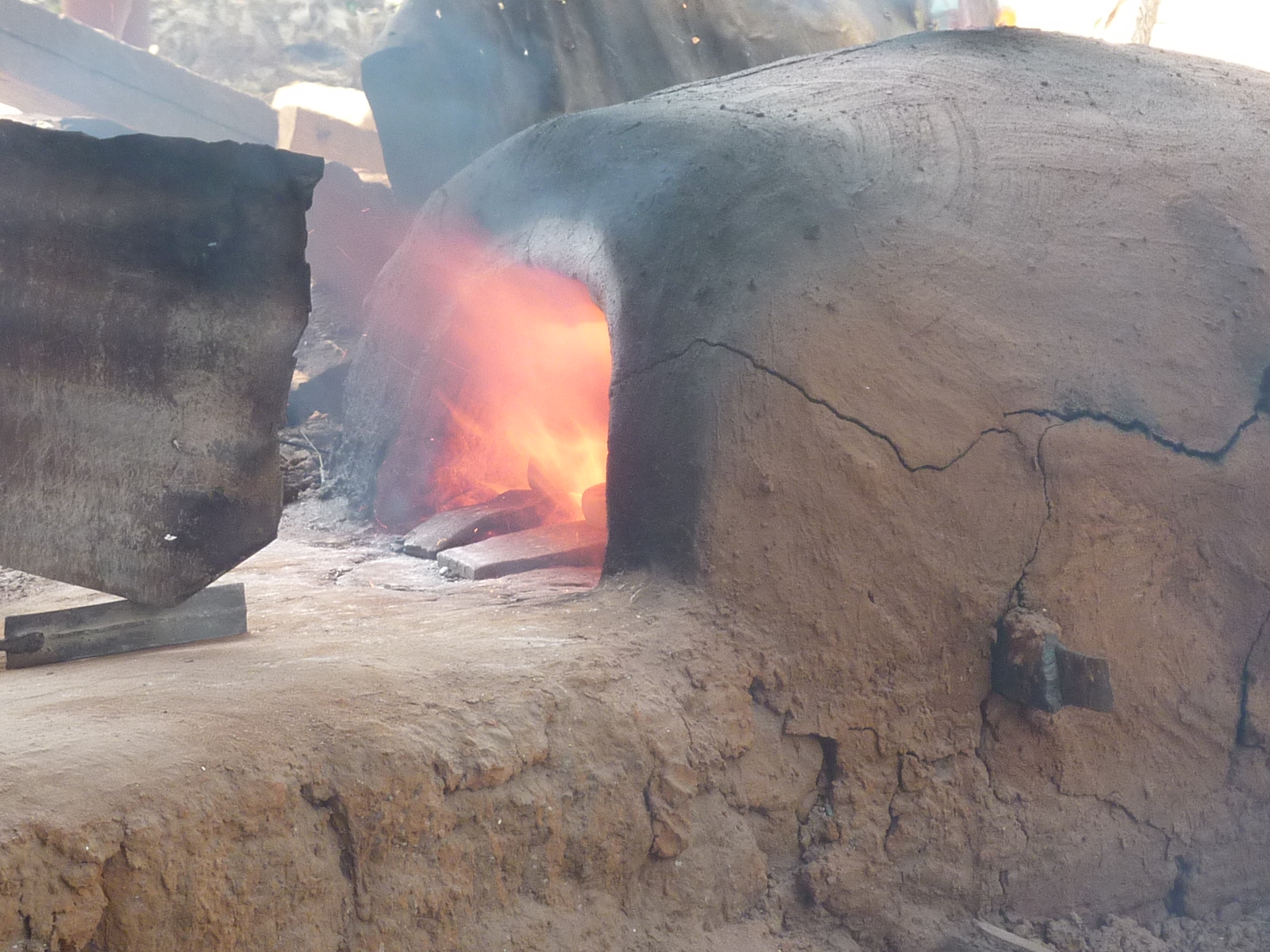
Wood fired kiln (made of spare vehicle parts moulded together with clay)
6. It is removed after 15-20 minutes and each bead is then cleaned with a sandy solution.
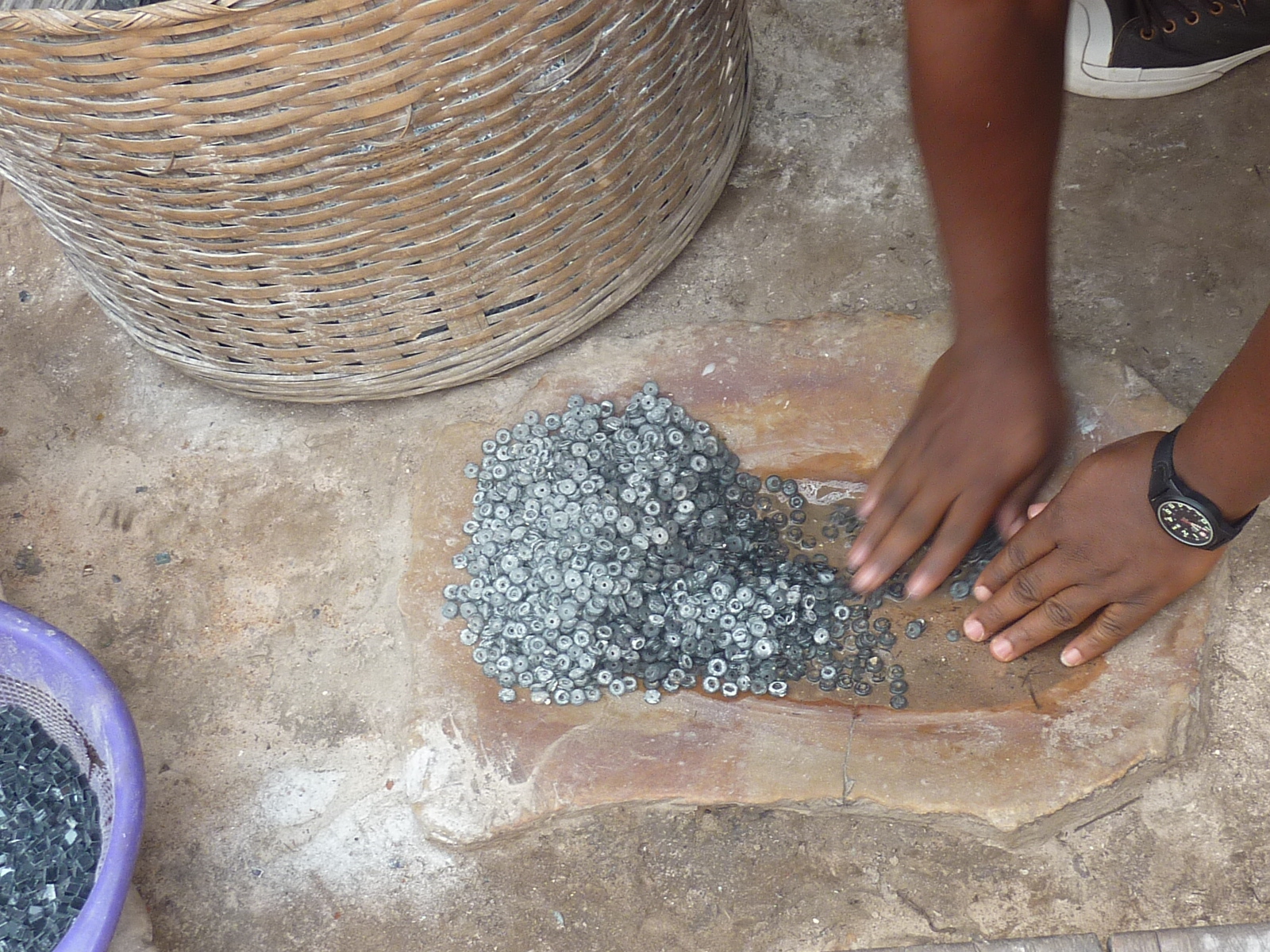
Washing the beads.

Cleaned beads
7. After cleaning, each bead is painted and baked again before being strung on a string as a necklace/bracelet/etc.

The finished product!
8. Repeat steps 1-7. They do this 12 hours a day/7 days a week. They told us how much they make from selling these beads and I won’t say the exact number but it is not very much above the poverty line.
 Kamikaze Canuck
Hey Jason, just wanted to say thank you for once again wowing us with your excellent blogging skills. Great pics and always a great read. Have a safe trip home. -Matty
Thanks for sharing your journey. You have taught us about Ghana, showed us interesting sights and made us laugh- like usual with your blogs. We’re always happy to get a new one. Take care- hope it was a good trip home.
Glad you enjoyed it. It went so fast that it’s hard to believe a month has passed!
Jason
Thanks Matt – Glad you enjoyed it. The blog gets easier to write each year I do it. I’m consistently surprised with how many views it gets.